Who may be a sub-contractor’s client under TUPE?

In a case where a local council sub-contracted the management of its car park, the Employment Appeal Tribunal (EAT) has decided that it was possible the council might be the client of the sub-contractor for TUPE purposes.
Background
The London Borough of Havering owned a site which consisted of an ice rink and a car park. Havering contracted out the management of the site to Saturn Leisure who in turn sub-contracted responsibility for the car park to Regal Car Parks. In April 2013, Saturn ended its involvement with the site, with responsibility for the car park returning to Havering.
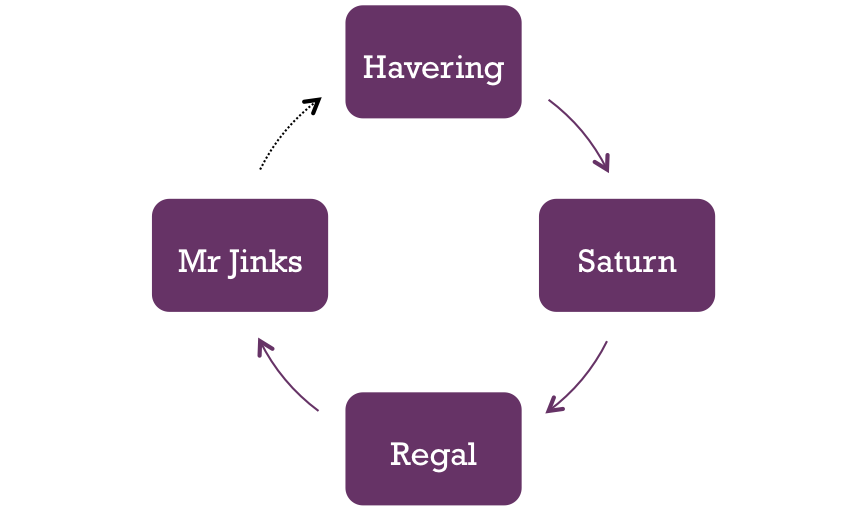
Mr Jinks was an employee of Saturn. He argued that his employment had transferred to Regal when they were sub-contracted to look after the car park and had then transferred to Havering when they took back control of the car park from Saturn. Havering disputed that Mr Jinks had become their employee. He subsequently brought a claim for unfair dismissal in the Employment Tribunal.
The claim
The claim failed to progress beyond the preliminary stage. The Employment Tribunal noted that when a service provision change under TUPE (Transfer of Undertakings (Protection of Employment) Regulations 2006) occurs, the client of the sub-contractor must be the same both before and after the transfer. The Tribunal found that in this case Saturn had been the client of Regal. Saturn had given up its interest in the car park without transferring the benefit of its contract with Havering to another sub-contractor. The Tribunal struck out the claim because it found that the requirements for a TUPE transfer had not been met.
EAT’s decision
The EAT disagreed with the approach taken by the Employment Tribunal and decided that the employment judge had misdirected himself in law as to the correct approach to TUPE.
The EAT focussed on Regulation 3(1)(b)(iii) of TUPE which applies to an outsourced contract that is taken back in house. The EAT noted that Regulation 2(1) of TUPE widens the meaning of “contractor” so it can be treated as including the word “sub-contractor”. This meant Regulation 3(1)(b)(iii) could extend to activities that cease to be carried out by a sub-contractor on a client’s behalf which are then carried out instead by the client on its own behalf.
The case turned on who was the correct client for TUPE purposes and whether it could be said that Havering was the ultimate client of Regal. This question needed to be determined on the facts of the case and was not merely an issue of law. The Tribunal had not considered this issue and had taken too narrow an approach by determining that only Saturn could be Regal’s client and not considering whether Havering could also be Regal’s client.
“The Employment Judge took an impermissible short cut by treating the client of a sub-contractor as necessarily being, and only being, the contractor to which it was contractually bound to provide a service…the person on whose behalf services are provided by a sub-contractor may not necessarily be the contractor from whom the sub-contract is held. ” Employment Appeal Tribunal
The case was remitted back to the Employment Tribunal to establish whether on the facts it could be shown that Havering was the client of Regal. This would require a determination of on whose behalf Regal was running the car park.
CASE Jinks v London Borough of Havering, Employment Appeal Tribunal, 4 June 2015